
Founders keep hiring their first marketer for the wrong job


If you’re the first marketer, your job isn’t more customers. Not yet.
“Startups begin with founder-led sales, then hire one or two salespeople. Then they hire a marketing person and say, ‘Okay, now get me more of those customers.’ And that doesn’t work.”
Ajeet Singh, co-founder and CEO, Different
It’s the brief most first marketers get, and Ajeet sees it most from first-time founders, who have often never seen a marketing function built from scratch.
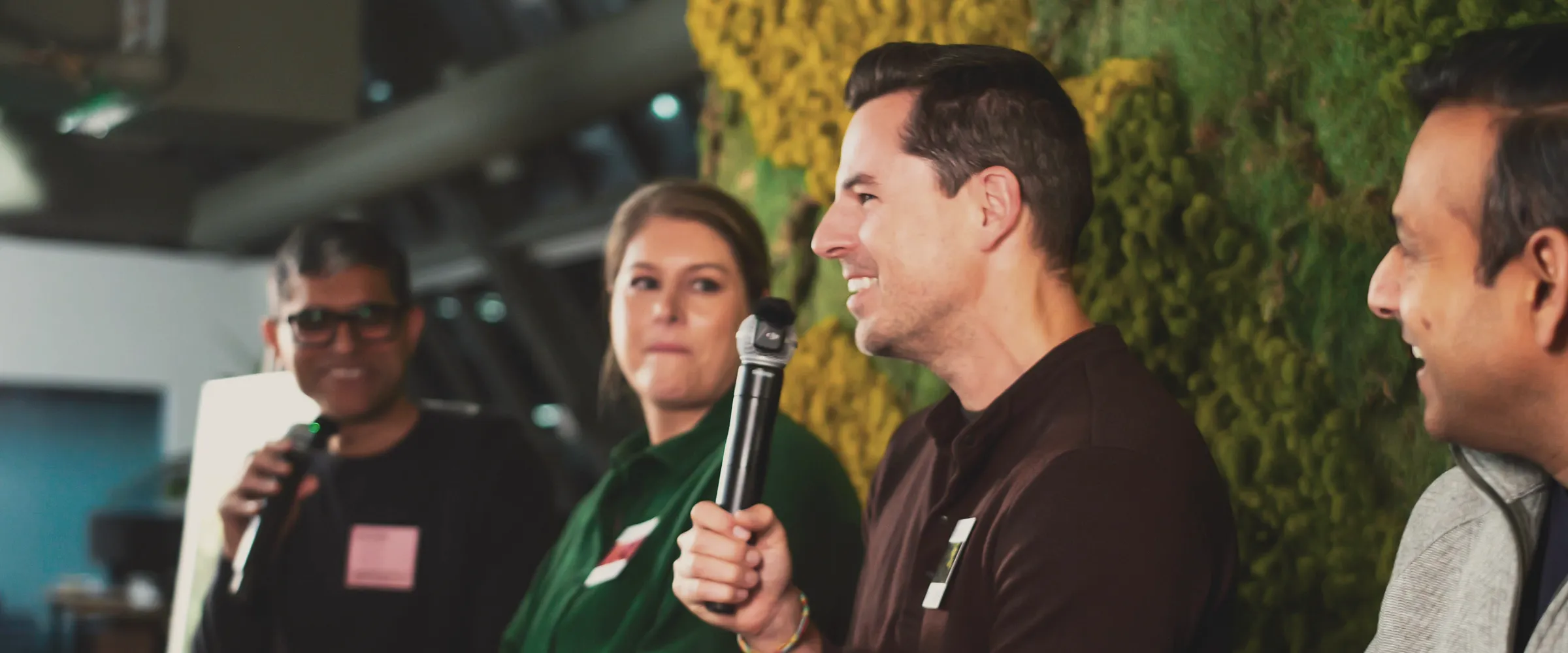
We talked to three startup leaders who have lived this handoff from both sides: Rishi Bhargava, a two-time founder who co-founded Descope; Scott Holden, who leads marketing at SpaceXSI and ran it at ThoughtSpot, Vanta and Brex; and Alexis Dougherty, VP of Marketing and first marketer at Lensing. Put their experiences side by side and one pattern stands out.
Founders hire their first marketer to scale, but at many early companies there’s nothing repeatable to scale yet. What the founder learned closing those first deals lives in their head. If you’re that marketer, your real job is getting it out: finding the story that won those customers, testing it, and writing it down, so there’s something worth scaling.
The founder’s first job: get the message right
Rishi has been on the founder side of this twice. At his previous company, Demisto, three of the four founders came from engineering and the fourth was a generalist, so someone had to own marketing. “I drew the CMO straw,” he said. “I’d never done marketing.” Looking back, it wasn’t the short straw. It taught him that the first marketing decision belongs to the founder, before anyone is hired: “As a founder, your first step is to get your messaging right and tell your story.”
That’s where the handoff starts to fail. If the founder hasn’t settled the story, a new marketer has nothing to scale, so asking for “more of those customers” really means asking them to find the message too.
Scott has been that new marketer. In ThoughtSpot’s early days, he had a long run of conversations with Ajeet, ThoughtSpot’s co-founder, building the case for the company’s positioning. He learned to slow down and explain his reasoning, because otherwise a founder gives you “the quiet nod, but they’re not really bought in, and then you’re in a bad spot.” The back-and-forth is the work.
The marketer’s job: test your way to the story
A new marketer can’t interview their way to everything the founder knows. Some of the founder’s playbook only surfaces by testing it: does this message land the way it did on the founder’s sales calls, and does this segment buy for the same reasons? Some of those tests will miss, and that’s useful. Each miss narrows down what actually won the first customers, but only if a miss is allowed.
Scott treats every campaign that way. “Everything you do in marketing is a hypothesis that can do well or not,” he said. “Take a little bit of your own emotion out of it, and suddenly you find yourself on the same level with the founder.”
Alexis has worked for enough founders to know no two are alike, and she’s stopped expecting them to behave like a type. What she looks for instead is one thing, at every company and every stage: “making sure I have room to fail, and that the team has room to fail, so we’re taking big enough swings.”
Without it, a marketer stops testing and starts guessing, and the founder’s playbook stays in the founder’s head. Ajeet built on Alexis’s point and put the responsibility on founders: “Founders should be creating this safe space to fail.”
Scale what you know; learn what you don’t
Alexis has joined companies at very different stages. For her, the main difference between stages is how much the company already knows about its customer.
At a scaling company with a proven story, the first marketer’s job is to find more people to tell it to and turn that awareness into demand. That’s the brief founders imagine when they say “get me more of those customers,” and at that stage it’s the right one. When she joined Lensing, though, it had a couple of customers and almost no revenue. So the work was different: customer discovery and sitting in on sales calls to hear what resonated.
At either stage, she builds systems from day one, and she doesn’t mean the martech stack. She means a way to capture what the team learns, so it shapes the next campaign. “If you’re the first marketer, you’ll spend a lot of time learning,” she said. “And learning is expensive, because while you’re learning, you’re not doing.”
Her example is the two- or three-sentence company description. You’ll need it for every event form and speaking pitch, and without a single home for it, “that message is going to drift really dramatically over time.”
It’s the handoff problem from the marketer’s side. Before you can scale, someone has to write down the foundation: the core message, who’s buying it and why.
Learning is also where AI changes the math. A team can now test a new message or segment in days rather than months, so less of the first year goes to learning and more goes to doing.
Taking the handoff: four things to ask your founder for
- Extract the story. Don’t wait to be handed it. Interview your founder for the positioning and a two- or three-sentence description before your first campaign, and give it one home.
- What they learned, not just a target. Who bought, why, and what they heard on sales calls. If nobody can answer yet, your first job is discovery, not scale.
- An agreement that campaigns are tests. Decide up front how each one will be measured, so a miss reads as data rather than a verdict.
- Room to fail. Big enough swings need cover. Ask for it before the first miss, not after.
The founder who closed the first customers knows something no new hire does. The handoff works when that knowledge moves to the marketer before anyone asks for more customers.
“Make sure your team has room to fail, so you’re taking big enough swings.”
Alexis Dougherty, VP Marketing, Lensing